Pay Per Click Advertising, A Practical Guide for Small Businesses

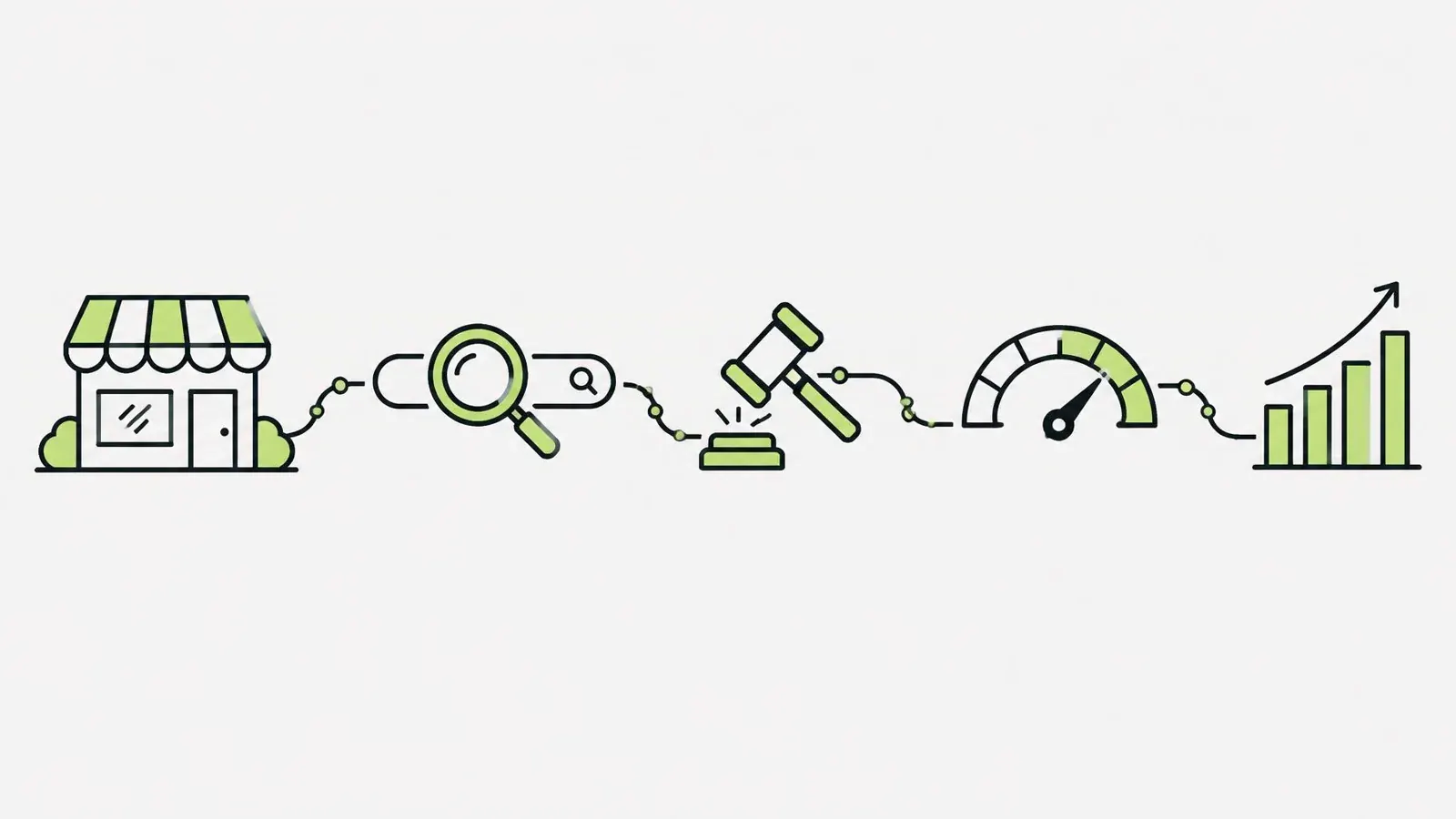
Pay per click advertising means you pay only when someone clicks your ad. No click, no charge. Your ad appears when a person searches for what you sell or matches the audience you chose, and an instant auction decides whose ad shows.
Most guides on the topic read like encyclopedias. You get a working guide here instead. What PPC is, which platforms matter for a small business, what it really costs, how to set up a first campaign that does not waste money, and how to tell whether it pays back.
1.What pay per click advertising is
Pay per click advertising, usually shortened to PPC, is a way to buy visits to your website instead of earning them over time. You create an ad, tell the platform who should see it, and set the most you will pay for a click. When your ad shows and someone clicks, you pay. When it shows and nobody clicks, you pay nothing.
The most common form is paid search. Someone types "emergency plumber near me" into Google, and ads from plumbers appear above the regular results. The person wants a plumber right now, and your ad puts your business in front of them at that exact moment. That timing is what makes PPC valuable.
2.How the auction works
Every time a search happens, the platform runs an auction in a fraction of a second. You never see it, but understanding it saves you money.
Your position is not decided by budget alone. Google calls the deciding factor ad rank, and it combines two things. Your bid, the maximum you will pay per click, and your quality, which covers how relevant your ad and landing page are to the search. A relevant ad from a small business can outrank a bigger competitor who bids more but writes a lazy ad.
You also rarely pay your maximum bid. You pay roughly what is needed to beat the advertiser below you. A well-built campaign with strong relevance often pays less per click than a sloppy one targeting the same search.
3.Why PPC works for small businesses
Speed is the first reason. SEO takes months to build. A PPC campaign can bring calls the same week it launches. When you need leads now, paid search is the fastest legitimate way to get them.
Control is the second. You choose the exact searches, locations, times of day, and budget. A plumber can show ads only within twenty miles, only during business hours, only for emergency searches. No other channel gives a small business that level of precision.
Measurement is the third. Every click, call, and form fill can be tracked back to the keyword and the ad that caused it. You always know what your money did, which makes decisions simple. Keep what works, stop what does not.
4.The main PPC platforms
You do not need all of them. Most small businesses should start with one and add others only when the first is profitable.
Google Ads
Google Ads is where most small businesses should start, because it captures intent. People searching "roof repair cost" or "divorce lawyer in Austin" are already looking for what you sell. You bid on those searches and your ad appears above the organic results.
Search campaigns are the core. You pick keywords, write text ads, and send clicks to a page on your website. Google also offers display, shopping, and video campaigns, but search is where a first budget belongs.
Local Services Ads
Local Services Ads sit above even the regular Google ads for service businesses such as plumbers, electricians, cleaners, and lawyers. You pay per lead instead of per click, and Google verifies your business before you can run them. If you run a local service company, check whether your trade is eligible. The leads often cost less than search clicks for the same job.
Facebook and Instagram ads
Meta ads work differently. Nobody searches on Facebook for a plumber. Instead, you show ads to people based on who they are and what they care about. That makes Meta strong for businesses people buy from on impulse or emotion, such as restaurants, gyms, boutiques, and events. It is weaker for urgent needs, where search wins.
Microsoft Ads
Microsoft Ads shows your ads on Bing and its partner networks. The audience is smaller than Google, but so is the competition, and clicks often cost less for the same search. Once a Google campaign works, copying it to Microsoft is a cheap way to add volume.
5.How much pay per click advertising costs
You decide the total. Every platform lets you set a daily or monthly budget, and spending stops when the budget runs out. There is no minimum beyond what you choose.
The price per click depends on your industry, your location, and how many competitors bid on the same searches. Clicks for local services can cost a few dollars. Clicks for lawyers or insurance can cost far more because a single new client is worth thousands. Your own numbers matter more than any average, so treat published cost benchmarks as rough context, not promises.
A sensible starting point is a test budget you can afford to learn with. Run it for a few weeks, measure what a lead or sale costs you, and compare that to what a customer is worth. Increase the budget only after the math works.
6.How to set up your first campaign
A first campaign succeeds or fails on focus. One goal, one service, one tight set of searches.
Choose one goal
Decide what a win looks like before you spend anything. Phone calls, form submissions, bookings, or online orders. One campaign, one goal. When everything matters, nothing gets measured.
Pick the right keywords
Start with searches that show buying intent. "Emergency ac repair" beats "how air conditioners work" because the first person needs help now. Ten to twenty tightly related keywords is enough for a first campaign. Broad, casual searches burn budget on people who are browsing, not buying.
Write ads that match the search
Your ad should repeat the searcher's need back to them. Someone searching "same day dryer repair" should see an ad about same day dryer repair, not a generic line about your company. Matching ads earn more clicks, and better click rates improve your quality score, which lowers what you pay.
Send clicks to a page built to convert
Never send paid clicks to your homepage. Send them to a page about the exact service they searched for, with a clear phone number and a short form. Every extra step between the click and the contact costs you money. If your website is not ready to convert visitors, fix that first, because paid traffic only magnifies the problem. Our website design services cover exactly that kind of page.
Set a budget you can test with
Pick a daily budget that lets the campaign gather real data over a few weeks. Too small and you learn nothing. Too large and early mistakes get expensive. Start modest, watch the search terms your ads actually show for, and block the irrelevant ones.
7.How to measure results
Clicks are not results. A click is a cost. The result is the call, the form, the booking, or the sale that follows.
Set up conversion tracking before launch. Google Ads can track calls from ads, calls from your website, and form submissions, and Google Analytics connects the rest of the journey. Without tracking you are guessing, and guessing is how budgets disappear.
The number that matters most is cost per result. Divide what you spent by the number of leads or sales you got. Then compare it to what a customer is worth to you. If a lead costs you forty dollars and one in four leads becomes a six hundred dollar job, the campaign works. If the math does not work, change the targeting, the ads, or the landing page before you add money.
Review the account weekly. Look at which keywords produced results, which search terms wasted money, and which ads people actually clicked. Small weekly adjustments beat a monthly overhaul.
8.Common PPC mistakes that waste money
The most expensive mistake is broad targeting. Default settings push you toward wide audiences and loose keyword matching, which shows your ads to people who will never buy. Tighten everything at the start and loosen only with evidence.
The second mistake is no negative keywords. Negative keywords tell the platform which searches to avoid. A premium remodeler who blocks "free", "cheap", and "diy" stops paying for clicks that were never going to convert.
The third is sending every click to the homepage. The fourth is launching without conversion tracking. The fifth is setting the campaign and ignoring it. PPC rewards attention. An account nobody checks for three months quietly bleeds money on searches you never wanted.
9.PPC or SEO, which comes first
They answer different needs. PPC delivers visibility within the week and stops the day you stop paying. SEO builds slowly and keeps working after the effort. Most small businesses do best with both, PPC for leads now and SEO for cheaper leads later.
If your budget forces a choice, start with PPC when you need customers immediately, and start with SEO when you can invest for the long term. Our guide to digital marketing for small business shows how the channels fit together, and our local SEO guide covers the search side in depth. When you want a team to run the paid side for you, our PPC services are built for exactly that.
10.Your first two weeks with PPC
Keep the first two weeks simple. Launch one campaign with one goal, a tight keyword list, matching ads, and a dedicated landing page. Check the search terms report in the first few days and block anything irrelevant. Watch which ads get clicks and which keywords produce calls or forms.
At the end of two weeks you will know your cost per lead, your best keywords, and your worst waste. That knowledge is the real product of a first campaign. Scale what proved itself, cut what did not, and let the numbers, not hope, decide the next budget.
Frequently Asked Questions
What is pay per click advertising?
Pay per click advertising is a model where you pay only when someone clicks your ad. Your ads appear on search engines or social platforms, an auction decides which ads show for each search or audience, and you set the maximum you are willing to pay per click.
How does pay per click advertising work?
You choose keywords or an audience, write an ad, and set a budget and a maximum cost per click. When someone searches or matches your audience, the platform runs an instant auction among advertisers. Your ad rank depends on your bid and your ad quality, and you pay only when a person clicks.
How much does pay per click advertising cost?
You control the budget, so the total cost is your decision. The price per click varies by industry, location, and competition. Google Ads lets you set daily budgets and maximum bids, and you can start small, measure, and increase only what proves profitable.
Does pay per click advertising work for small businesses?
It works when the campaign is focused. A small business that targets the right searches, sends clicks to a page built to convert, and tracks calls or sales can see results within days. Broad targeting and no conversion tracking are the usual reasons it fails.
How do I start pay per click advertising?
Pick one platform, usually Google Ads for search intent. Choose one goal such as phone calls or form leads, select a tight set of keywords, write ads that match those searches, point them at a relevant page, set a test budget, and review results weekly.
Sources
Your next step
Turn useful ideas into a focused growth plan
Get a practical 90 day blueprint for your business, shaped around ppc and the customers you want to reach.
Continue reading
Related guides and insights
Digital Marketing for Small Business, A Practical Starting Plan
A clear, step by step plan for small business digital marketing. Learn what to set up first, which channels to add next, how to budget, and how to measure results.
Local SEO for Small Business, A Practical Guide
Learn how local SEO works and the exact steps that help your small business show up when nearby customers search on Google.
Email Marketing for Small Business, A Practical Starting Guide
A clear starting guide to email marketing for small business. Learn how to pick a platform, build your list legally, decide what to send, and measure real results.