Email Marketing for Small Business, A Practical Starting Guide

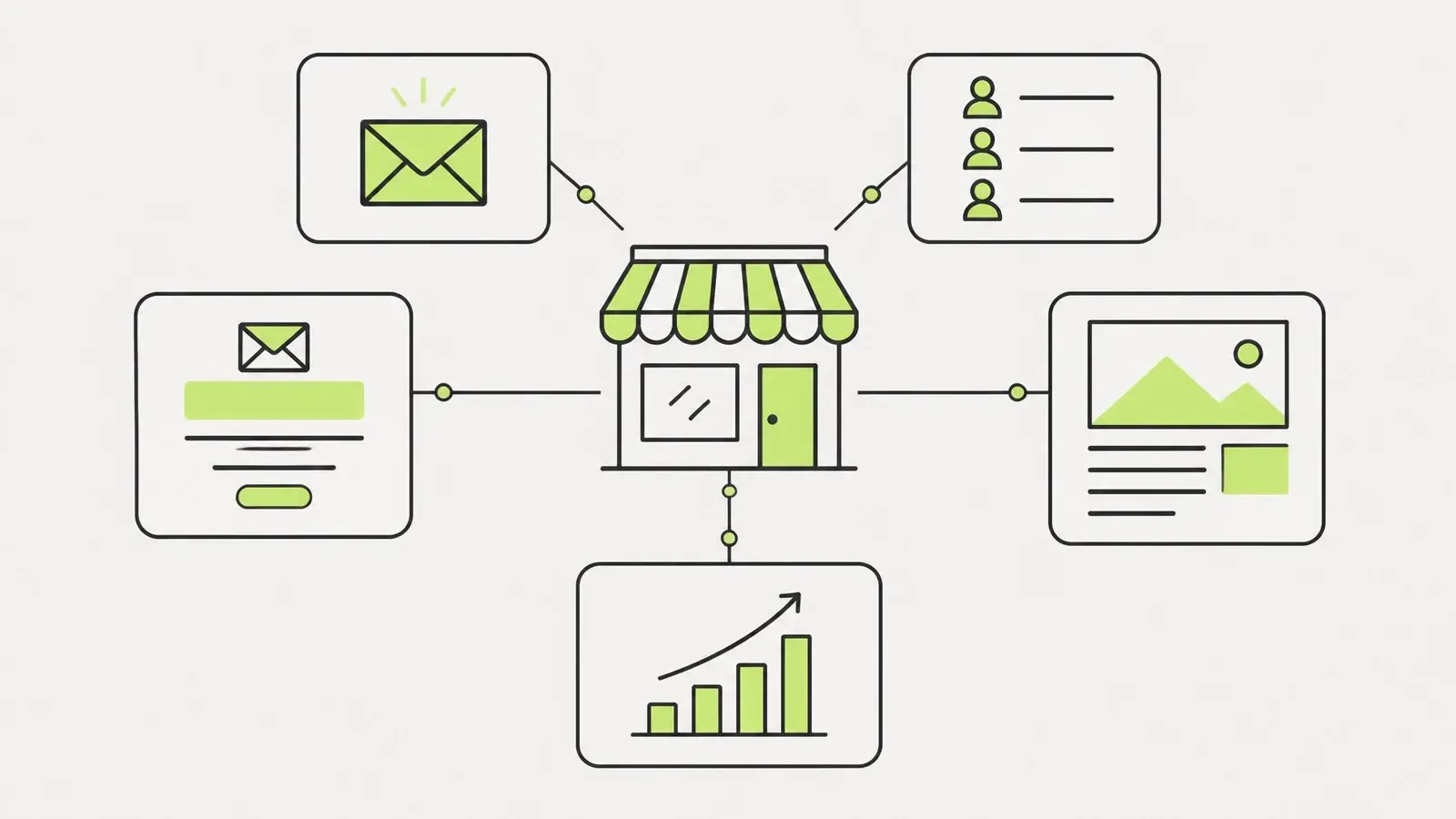
Email marketing for small business means staying in touch with people who already raised their hand. Past customers, warm leads, and visitors who asked to hear from you. Done well, it brings those people back at a fraction of the cost of finding new ones.
Most guides on the topic are really lists of software tools. You get a working plan here instead. How to set up the basics, how to build your list the legal way, what to send, how often, and how to tell whether your effort pays back.
1.Why email still works for small businesses
Social platforms decide who sees your posts. Ad platforms charge you every time you want attention. Your email list works differently. You own it, and nobody stands between you and the people on it.
That ownership matters most for a small business. Your budget is limited, so channels you control carry more value than channels you rent. A customer who bought once and hears from you regularly is far cheaper to win again than a stranger.
Email also gives you clean measurement. Every send reports who opened, who clicked, and who unsubscribed. Connect those clicks to your website analytics and you can see which messages lead to calls, bookings, or orders.
2.Get the foundations right
Three decisions shape everything that follows. Take them in order and keep each one simple.
Choose a platform you will actually use
Every major email platform offers the same core features. Signup forms, templates, a way to send to your list, and reports. The differences that matter to a small business are price at your list size, ease of writing and sending, and basic automation for a welcome email.
Start on a free or low cost plan. You can always move later, and most platforms let you export your list. Spending more on software does not send better emails. Consistency does.
Avoid choosing by feature count. A long feature list you never touch adds cost and confusion. Pick the tool that makes a monthly send feel easy.
Build your list the legal way
Only email people who asked to hear from you. In the United States, the CAN-SPAM Act sets the rules for commercial email. You must identify yourself, include your physical address, honor unsubscribe requests promptly, and avoid deceptive subject lines. If you email people in the United Kingdom or the European Union, stricter consent rules apply under privacy law there.
Never buy a list. Purchased addresses did not choose you, they mark you as spam, and spam complaints can get your account shut down. A small list of people who opted in will outperform a large bought list every time.
Practical ways to grow your list include the following.
- Add a clear signup form to your website, especially on your homepage and contact page
- Ask at the point of sale or after a completed job, when satisfaction is highest
- Offer a useful reason to join, such as tips, updates, or a subscriber-only offer
- Collect addresses at events or in your shop with a simple signup sheet or QR code
Tell people what they will receive and how often. Clear expectations at signup mean fewer unsubscribes later.
Set up the essentials before your first campaign
Three small setup steps protect your results.
Write a welcome email that goes out automatically when someone joins. Introduce your business, confirm what they signed up for, and give them one useful thing right away. Welcome emails are usually the most opened messages you will ever send.
Send from a real name. People open emails from people. Your name or your business name works better than a generic address like info or noreply.
Check how your emails look on a phone before you send. Most of your readers will open on mobile, and a broken layout costs you trust.
3.What to send
You need fewer email types than you think. Four cover almost everything a small business should send.
The welcome sequence
One welcome email is the minimum. Two or three spread over the first week work better. The first introduces you. The second shares your most useful content or answers the question new customers ask most. The third makes a gentle offer or invites a reply.
Keep each email short and focused on one idea. The goal is to start a relationship, not to close a sale on day one.
The regular newsletter
A newsletter is the backbone of small business email marketing. Send it on a schedule you can keep, monthly at first. Fill it with things your readers actually want. A useful tip, a short answer to a common question, a recent project, or a seasonal reminder.
Write like you talk to customers. Plain language, one main idea per email, and one clear action at the end. Reply, book, read, or buy.
Promotions and offers
Promotional emails work when they are occasional and relevant. A seasonal offer, a new service, or a limited slot announcement gives your list a reason to act now.
Balance matters here. If every email asks for a sale, people stop opening. A useful rule of thumb is to earn attention with helpful emails before you spend it on promotions.
Win-back emails
Some subscribers stop opening. Before you remove them, send one short email asking if they still want to hear from you. Offer an easy way to stay or leave.
Keeping your list clean improves delivery to everyone else. Inactive addresses drag down your open rates and can hurt whether your emails reach the inbox at all.
4.How often to send
Consistency beats frequency. One good email every month outperforms four rushed emails followed by three months of silence.
Pick a schedule you can sustain through your busiest season. Monthly is a strong starting point for most small businesses. Move to twice a month only when monthly feels easy and your readers engage.
Watch your unsubscribe rate as you change frequency. A small number of unsubscribes per send is normal and healthy. A sudden jump after you increase frequency is your list telling you to slow down.
5.Measure what matters
Your platform reports several numbers. Four of them tell you almost everything.
Open rate shows whether your subject lines and sender name earn attention. Click rate shows whether your content and your call to action work. Unsubscribe rate shows whether you are sending what people expected. Replies and direct responses show whether real people care.
Treat the numbers as trends, not verdicts on a single send. One quiet newsletter means little. Three months of falling opens means your content or your list needs attention.
The number that matters most sits outside your email platform. Did the email lead to business? Connect your emails to your website analytics so you can see which sends bring visits, calls, bookings, or orders. An email with a modest open rate that brings two jobs beats a clever email that brings none.
6.Common mistakes to avoid
Most small business email problems come from a short list of repeated mistakes.
Buying a list instead of earning one. Covered above, and worth repeating because it ends more email programs than any other error.
Sending only when you want something. If subscribers hear from you only during sales, they learn to ignore you. Useful emails between offers keep the relationship warm.
Writing for everyone. Your list joined because of your specific business. Specific, relevant emails to your actual customers beat generic newsletters every time.
Ignoring mobile. Long paragraphs, wide images, and tiny buttons lose readers on phones. Short paragraphs and one clear button per email work everywhere.
Giving up too early. Email compounds. The tenth send to a growing list does more than the first. Judge your program after a season of consistent sends, not after two.
7.Your first 30 days
A simple month one plan gets you from zero to a working program.
Week one, choose your platform and set up your account. Add your business details, your physical address for the footer, and your sender name.
Week two, create your signup form and put it on your website. Write your welcome email and turn on the automation so every new subscriber receives it.
Week three, add the people who already said yes. Past customers who asked for updates, contacts from your signup sheet, anyone who explicitly opted in.
Week four, write and send your first newsletter. One useful idea, one clear action. Then put the next send date on your calendar and keep the promise.
If you would rather have a team run email alongside your wider marketing, our marketing services cover the planning, writing, and sending for you.
8.Frequently asked questions
Should I use email marketing for my small business?
Yes, if you want a low cost way to stay in touch with people who already showed interest in your business. Email reaches customers directly, you own the list, and every send can be measured against real sales or bookings.
How do I start email marketing for my small business?
Pick one platform that fits your budget, add a signup form to your website, collect addresses with clear consent, and send a simple welcome email. Then choose one regular send, such as a monthly newsletter, and keep it consistent before you add more.
Why is email marketing important for small businesses?
Your list belongs to you, unlike followers on a social platform. Email lets you reach past customers and interested prospects directly, bring them back at the right moment, and see exactly which messages lead to calls, bookings, or orders.
What is the best email marketing platform for a small business?
The best platform is the one you will actually use every month. Look for simple templates, a free or low cost starter plan, signup forms, basic automation for a welcome email, and clear reports. Start small and move only when you outgrow it.
Does email marketing work for small businesses?
It works when the list is earned and the emails are useful. Businesses that collect addresses with consent, send on a steady schedule, and write for their readers see repeat sales and referrals. Bought lists and irregular sending rarely work.
Frequently Asked Questions
Should I use email marketing for my small business?
Yes, if you want a low cost way to stay in touch with people who already showed interest in your business. Email reaches customers directly, you own the list, and every send can be measured against real sales or bookings.
How do I start email marketing for my small business?
Pick one platform that fits your budget, add a signup form to your website, collect addresses with clear consent, and send a simple welcome email. Then choose one regular send, such as a monthly newsletter, and keep it consistent before you add more.
Why is email marketing important for small businesses?
Your list belongs to you, unlike followers on a social platform. Email lets you reach past customers and interested prospects directly, bring them back at the right moment, and see exactly which messages lead to calls, bookings, or orders.
What is the best email marketing platform for a small business?
The best platform is the one you will actually use every month. Look for simple templates, a free or low cost starter plan, signup forms, basic automation for a welcome email, and clear reports. Start small and move only when you outgrow it.
Does email marketing work for small businesses?
It works when the list is earned and the emails are useful. Businesses that collect addresses with consent, send on a steady schedule, and write for their readers see repeat sales and referrals. Bought lists and irregular sending rarely work.
Sources
Your next step
Turn useful ideas into a focused growth plan
Get a practical 90 day blueprint for your business, shaped around small business marketing and the customers you want to reach.
Continue reading
Related guides and insights
Local SEO for Small Business, A Practical Guide
Learn how local SEO works and the exact steps that help your small business show up when nearby customers search on Google.
Digital Marketing for Small Business, A Practical Starting Plan
A clear, step by step plan for small business digital marketing. Learn what to set up first, which channels to add next, how to budget, and how to measure results.
SEO Content Strategy, How to Plan Content That Ranks and Sells
A practical SEO content strategy guide for small businesses. Learn how to set goals, research keywords, build topic clusters, plan a calendar, and measure what your content earns.
Pay Per Click Advertising, A Practical Guide for Small Businesses
A plain-English guide to pay per click advertising for small businesses. Learn how the auction works, what it costs, how to set up your first campaign, and how to measure real results.