Local SEO for Small Business, A Practical Guide

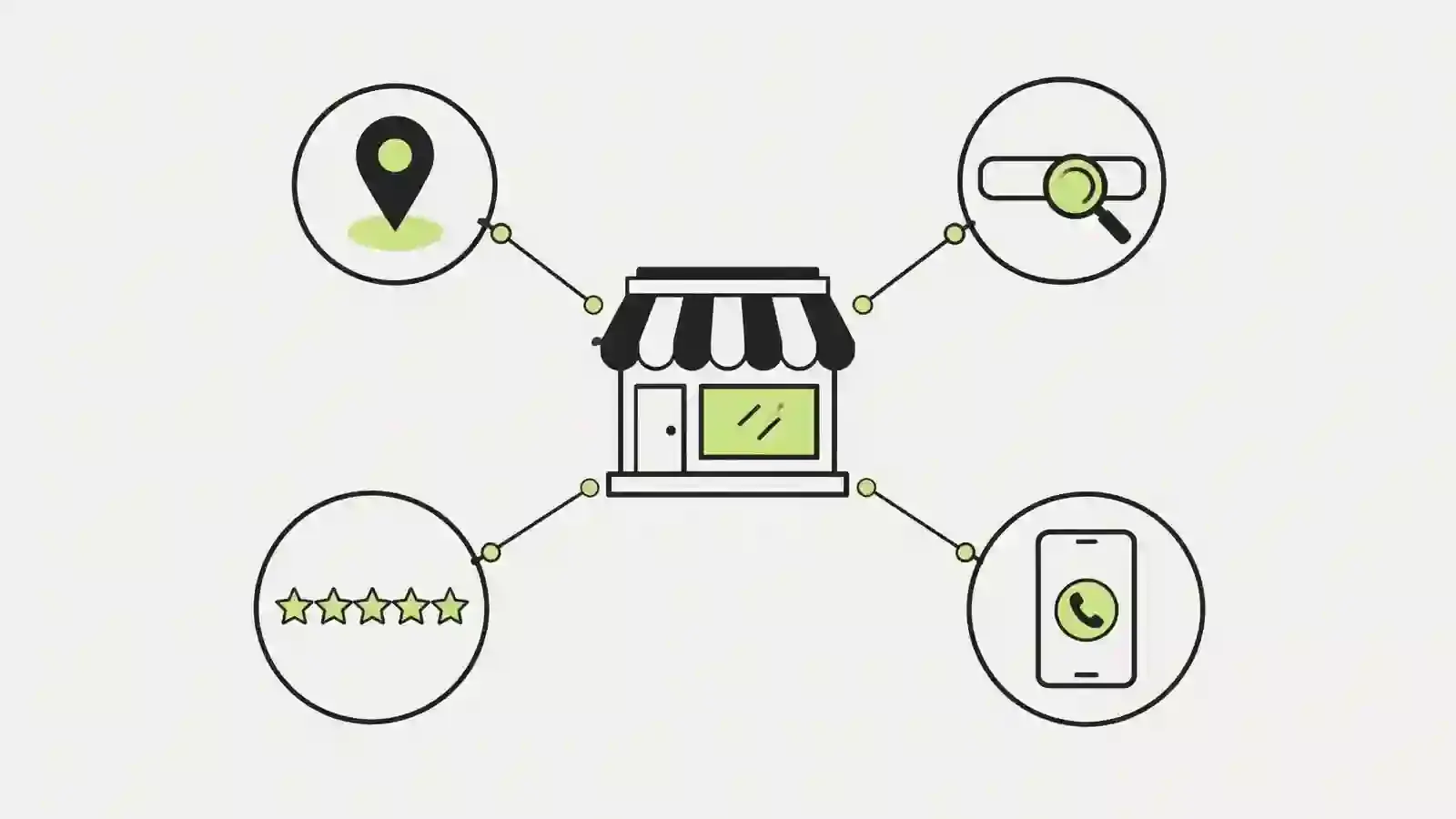
When someone nearby needs what you sell, they search first. They type a few words into Google, scan the map results and the first page, and contact whoever looks credible. If your business is missing from those results, that customer calls a competitor.
Local SEO is the work that puts your business in front of those searchers. It costs time more than money, and the steps are learnable. Here is what local SEO is, how Google decides who shows up, and the exact order to do the work in.
1.What local SEO is and why it matters
Local SEO is the practice of making your business visible when people search for a product or service in a specific place. Searches like "plumber near me" or "dentist in Austin" trigger a special set of results. Google shows a map with three businesses, called the map pack, followed by the regular list of websites.
Those map results get a large share of the clicks and calls, because they show reviews, hours and a call button before the searcher ever visits a website. For a small business that serves a local area, appearing there is often worth more than ranking a blog post nationally.
Local SEO matters for a simple reason. The person searching has already decided to buy. They are not browsing for ideas. They are looking for someone to call, and local SEO decides whether that someone is you.
2.How Google decides local rankings
Google is open about the three factors behind local rankings. Relevance, distance and prominence.
Relevance means how well your business matches what the searcher wants. A complete profile with the right categories tells Google what you do. Distance means how close you are to the searcher or the area they named. You cannot change your location, so the work goes into the other two factors. Prominence means how well known and trusted your business appears online. Reviews, links from other sites, accurate listings and an active profile all feed it.
Your job is to give Google clear, consistent proof of what you do, where you do it and why customers trust you. Every step below builds one of those three factors.
3.Set up your Google Business Profile
Your Google Business Profile is the listing that appears in the map pack and on Google Maps. It is free, and it is the single highest-impact item in local SEO. If you only do one thing from the guide, do the profile well.
Choose the right categories
Your primary category is one of the strongest relevance signals you control. Pick the category that describes your main service, not your business in general. A company that mostly installs fences should choose fence contractor, not construction company. Add secondary categories for your other real services, and skip any category for work you do not actually do.
Complete every section
Fill in your hours, service area, services list, description and attributes. Write the description for a customer, not for a search engine. Say what you do, who you serve and what makes working with you straightforward. Upload real photos of your work, your location and your team. Businesses with complete, photo-rich profiles earn more calls than empty ones, and Google confirms that complete profiles are more likely to show in results.
Keep it active
A profile that was completed once and abandoned sends a weak signal. Add a photo when you finish a job, publish a short update now and then, and answer questions customers post. Steady activity tells Google your business is open, real and engaged.
4.Get your website ready
Your website supports your profile. Google cross-checks the two, and the regular results below the map pack still matter for searches where the map does not answer everything.
One page per service
Google ranks individual pages for individual searches. A homepage that briefly mentions ten services will lose to a competitor with a dedicated page for each one. Build a page for every main service you sell. On each page, answer the questions customers actually ask. What you do, who you do it for, what it costs, and how fast you can start. If you serve several towns, a page for each area can work well, as long as each page says something genuinely useful about that area rather than repeating the same text with the town name swapped.
Location signals
Put your business name, address and phone number on your website, usually in the footer of every page, and make sure they match your profile exactly. Embed a map on your contact page. Mention your city and service area naturally in your page titles and headings where they belong. If you are a service-area business without a public address, your website can name the towns you cover instead.
Mobile and speed
Most local searches happen on a phone, often by someone standing in a car or a kitchen with a problem to solve. Your site needs to load fast and work well on a small screen. Large unoptimized photos are the most common cause of slow pages. Compress them first, and check your site on your own phone the way a customer would.
5.Build reviews the right way
Reviews do two jobs at once. They persuade the person reading them, and they feed the prominence factor that decides who appears in the map pack. A business with a steady flow of recent reviews will usually outrank a similar business with a handful of old ones.
Ask at the moment of highest satisfaction, right after you finish the work. Send a short text or email with your direct review link, which you can generate from your profile dashboard. Make the ask personal and specific. A request tied to a job you just completed converts far better than a generic blast to your whole list.
Reply to every review, including the critical ones. A calm, helpful response to a complaint often convinces future customers more than the complaint itself.
Never buy reviews, offer incentives for them, or have friends and family post fake ones. Google removes them, regulators fine businesses for them, and customers can usually tell. A slower flow of real reviews beats a fast pile of fake ones every time.
6.Citations and local directories
A citation is any mention of your business name, address and phone number on another website. Directories, industry listings, your local chamber of commerce and social profiles all count. Citations confirm to Google that your business exists and that your details are consistent.
Start with the major platforms. Bing Places, Apple Business Connect, Yelp, Facebook and the big data aggregators. Then add the directories specific to your industry and your city. The details must match your website and your Google profile character for character. A suite number written two different ways or an old phone number creates doubt, and doubt costs rankings.
You do not need hundreds of listings. A few dozen accurate ones on sites real people use will do the job.
7.Local content that brings nearby customers
Beyond your service pages, helpful articles keep working for months. Answer the questions your customers ask before they hire someone. A roofer can explain how to tell whether a leak needs a repair or a replacement. An accountant can explain the tax deadlines for a new business in their state. Each article meets a searcher at the moment they need that answer, and many of those searchers are local.
Tie content to your area where it fits naturally. Local rules, local weather, local prices and local examples all make your content more useful to the people most likely to become customers. One genuinely helpful article a month beats four thin ones written to fill a calendar.
8.Measure what matters
Ranking reports only matter if the phone rings. Watch three numbers instead. How many people find you through search, how many contact you, and where those contacts came from.
Your Google Business Profile dashboard shows how many people called you, asked for directions and visited your website from your listing. Google Analytics and Search Console show what your website earns from search. Together they tell you whether the work is paying back the time you put in.
Check monthly, not daily. Local SEO moves in weeks and months, and daily checking tempts you into changing things before they have had time to work.
9.Common local SEO mistakes
A few mistakes show up again and again, and each one is avoidable.
- Stuffing keywords into your business name on Google. It violates the guidelines and can get your profile suspended.
- Creating pages for towns you do not serve, with the same text and only the place name changed. Google recognizes the pattern and ignores or penalizes it.
- Letting your address or phone number drift out of sync across your website, profile and directories.
- Asking for reviews in bulk once, then never again. A steady flow looks natural because it is natural.
- Ignoring negative reviews. Silence reads as agreement.
- Paying for reviews or posting fake ones. The risk is a suspended profile and regulatory fines, not just a slap on the wrist.
10.Your first 30 days
You do not need to do everything at once. Work in the order below.
Days 1 to 7. Claim or create your Google Business Profile, choose the right primary category, complete every section and upload at least ten real photos. Verify the profile if Google asks you to.
Days 8 to 14. Fix your website basics. One page per main service, matching name, address and phone number in the footer, and a fast mobile experience.
Days 15 to 21. Set up your review process. Generate your review link, write a short request message and send it to your next five happy customers. Reply to every existing review.
Days 22 to 30. Clean up your citations on the major platforms and plan your first helpful article. Then keep the rhythm going. A few reviews and one article a month will compound.
If you would rather have a team handle the work while you run your business, our SEO services cover exactly that work, from your profile to your website to your reviews. And if your site itself needs work first, our website design service builds the fast, clear pages local search rewards.
Frequently Asked Questions
Why is local SEO important for a small business
Most customers search online before they call or visit a local business. Local SEO puts your business in front of those searchers at the exact moment they are ready to buy, and it keeps working without a daily advertising budget.
How long does local SEO take to work
Most businesses see early movement within one to three months after completing their Google Business Profile and fixing their website basics. Competitive areas take longer. Reviews and content keep building results over time.
Can I do local SEO myself
Yes. The core steps, such as completing your Google Business Profile, asking for reviews and improving your service pages, need time rather than technical skills. Many owners handle the basics themselves and bring in help for the technical work.
How much does local SEO cost for a small business
The foundational work is free if you do it yourself. Paid help typically ranges from a few hundred dollars per month for basic management to more for competitive markets. Start with the free steps before you spend anything.
Does local SEO work for service-area businesses without a storefront
Yes. Google lets service-area businesses hide their address and list the areas they serve instead. Plumbers, electricians, cleaners and other mobile businesses can rank in the map results without showing a public address.
Sources
- Google Business Profile Help, create and verify your profile
- Google Search Central, how local rankings work
- Google Business Profile Help, get Google reviews
- Google Business Profile Help, guidelines for representing your business
- Google Search Central, SEO starter guide
- U.S. Federal Trade Commission, rules on soliciting and paying for endorsements
Your next step
Turn useful ideas into a focused growth plan
Get a practical 90 day blueprint for your business, shaped around local seo and the customers you want to reach.
Continue reading
Related guides and insights

Digital Marketing for Small Business, A Practical Starting Plan
A clear, step by step plan for small business digital marketing. Learn what to set up first, which channels to add next, how to budget, and how to measure results.

SEO Content Strategy, How to Plan Content That Ranks and Sells
A practical SEO content strategy guide for small businesses. Learn how to set goals, research keywords, build topic clusters, plan a calendar, and measure what your content earns.

Email Marketing for Small Business, A Practical Starting Guide
A clear starting guide to email marketing for small business. Learn how to pick a platform, build your list legally, decide what to send, and measure real results.

Pay Per Click Advertising, A Practical Guide for Small Businesses
A plain-English guide to pay per click advertising for small businesses. Learn how the auction works, what it costs, how to set up your first campaign, and how to measure real results.